
The 10 essential steps of maintenance
1. Rinsing with fresh water: an essential step
Rinsing after each trip out to sea is the basis of maintenance. Salt infiltrates the cooling system and causes rapid corrosion if not removed. Attach the rinsing nozzles to the water intakes, connect a garden hose, and let the engine idle for 10 to 15 minutes.
This simple operation dissolves salt deposits and prevents the system from becoming blocked. Never run the engine dry, even for a few seconds, as this will irreparably damage the cooling turbine.
2. Visual inspection: anticipating problems
Regularly inspect your engine to detect any abnormalities before they become costly breakdowns. Check the propeller (for dents, cracks, or deformations), the base (for cracks), the water intake (clean the intake screens), and the electrical system (for signs of corrosion on the cables and battery terminals).
A damaged propeller causes excessive vibration, which accelerates engine wear. Any defective components must be replaced immediately.
3. Complete lubrication: protect moving parts
Lubrication protects moving parts from premature wear. Remove the propeller, clean the shaft of any debris (algae, fishing line), and apply a generous amount of water-resistant marine grease. Lubricate the steering shaft by turning it several times.
Use a grease gun to remove the old grease from the pivot shaft grease nipples until clean grease comes out. Don't forget the tilt shaft and trim shafts by operating the system several times during lubrication.
4. Changing the engine oil: the lifeblood of your engine
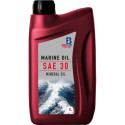
Engine oil lubricates, dissipates heat, and traps impurities. Change it every 100 hours or at the end of the season. Before draining, examine its appearance: a metallic sheen indicates abnormal wear, while a milky appearance reveals the presence of water (defective seals).
Warm up the engine for a few minutes, unscrew the drain plug, and let the oil drain out. Replace the plug gasket, screw it back in, and pour in the new oil recommended by the manufacturer.
Check the level between the min/max marks. Always use marine-grade oil, never standard automotive oil.
5. Replacing the oil filter: ensuring clean oil
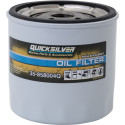
The filter traps impurities and must be changed with every oil change. Place rags under the filter, unscrew it with a suitable wrench, and clean the contact surface on the engine block.
Moisten the seal of the new filter with clean oil, screw it on by hand until it makes contact, then tighten it a further quarter turn. Over-tightening will damage the seal.
6. Replacing fuel filters: protecting the fuel system
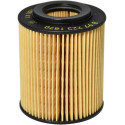
The filter protects the fuel system and must be replaced every 100 hours or at the end of the season. Close the fuel tap if present, loosen the clamps and remove the old filter. Install the new one in the correct direction of flow (indicated by an arrow).
A filter installed upside down will prevent the engine from starting. Tighten the clamps and check for leaks.
7. Changing the transmission oil: maintaining the base
The transmission oil lubricates the gears in the base and needs to be replaced annually. Check its appearance: a dark color with metal particles indicates wear on the gears, while a milky color indicates water infiltration (defective seals).
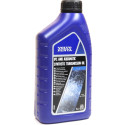
Place the engine in a vertical position, unscrew the lower and upper plugs, and let the oil drain out. Use a pump to fill through the lower opening until oil comes out of the upper opening. Screw the upper plug back in first, then the lower plug.
8. Inspection and replacement of spark plugs: the heart of combustion
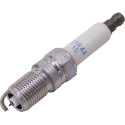
The spark plugs create the spark needed for combustion. Their color reveals how the engine is running: chocolate brown (normal), sooty black (fuel mixture too rich), white/light gray (fuel mixture too lean, risk of overheating), wet and oily (ring wear). Turn off the ignition, disconnect the cables, and unscrew the spark plugs.
Check the electrode gap on new spark plugs according to the manufacturer's specifications. Screw them in by hand, then tighten moderately.
9. Checking and replacing anodes: corrosion protection
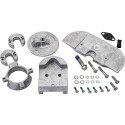
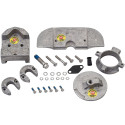
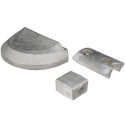
Sacrificial anodes protect your engine from electrolytic corrosion. Without them, metal components corrode quickly at sea. Inspect all anodes on the base and casing.
If they are more than 50% worn , replace them immediately. Apply marine grease to the mounting screws to facilitate future removal. Tighten correctly without forcing.
Guide to choosing the right anodes
10. Replacing the cooling turbine: preventing overheating
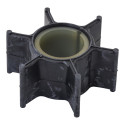
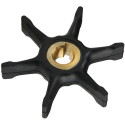
The turbine (or impeller) ensures water circulation in the engine. Signs of wear include a temperature alarm, reduced water flow, or pieces of rubber in the circuit.
Replace it preventively every 2-3 years or every 200-300 hours, even if it appears to be in good condition. A faulty turbine can cause catastrophic overheating in a matter of minutes.
To replace it, remove the base, unscrew the pump body (4-6 screws), and remove the old turbine. Clean the housing, grease the shaft and blades of the new turbine with marine grease. Install the turbine with its drive key, with the blades slightly curved in the direction of rotation. Reassemble by tightening the screws in a cross pattern.
Always keep a spare impeller on board (€15-60), a small investment compared to the risk of a major breakdown.
Preparing your engine for winter storage
Beyond standard maintenance, winterizing requires a few additional steps that will protect your engine during months of inactivity.
Completely drain the cooling system
After the final rinse of the season, tilt the engine to drain all residual water from the cooling system. In regions where freezing is common, this step is extremely important because water that freezes in the system can crack the engine block. For optimal protection, blow out the water system with compressed air to dry it thoroughly. This precaution removes any remaining moisture that could freeze.
Internal engine protection
Spray a protective product such as winterizing oil or fogging oil into the cylinders through the spark plug holes. This oily mist covers all internal surfaces and protects them from oxidation during storage. Then turn the engine several times by hand to distribute the product evenly throughout all cylinders.
Battery storage
Disconnect the battery from your engine and store it in a dry, frost-free place. A battery that remains connected will slowly discharge even on a stationary engine. Keep it charged with an automatic maintenance charger that preserves its capacity without the risk of overcharging.
External protection
Cover the engine with a breathable protective cover that protects it from the elements while allowing moisture to escape. Store it in an upright position to facilitate the drainage of any condensation.
Use of fuel additives
Fuel additives are highly recommended before winter storage. They maintain fuel stability during winter storage and prevent the formation of gums and varnish in the fuel system. These deposits can clog carburetor jets or injectors.
Additives also protect against internal corrosion and make it easier to start the engine after a long period of inactivity. Pour the additive into the tank and then run the engine for 10 to 15 minutes to distribute it throughout the fuel system.
The complete guide to successfully winterizing your boat
Your maintenance schedule
Well-organized maintenance follows a precise schedule that ensures the longevity of your engine.
Before each outing
Spend 5 to 10 minutes doing a quick visual inspection of all engine components. Get used to a regular routine that lets you spot any problems before you head out to sea.
After each outing
Rinsing with fresh water for 10 to 15 minutes at idle speed is essential. This simple habit will prevent most corrosion problems.
Every 50 hours or mid-season
- Check the engine oil level and inspect the condition of the propeller.
- Inspect the cooling system, making sure that the water indicator is working properly.
- Check the steering and tilt system for any abnormal play.
- Inspect the anodes for wear and replace them if necessary.
Every 100 hours or at the beginning/end of each season
- Change the engine oil and replace the oil filter.
- Drain the transmission oil from the base.
- Replace the fuel filter and spark plugs.
- Replace worn anodes and lubricate all lubrication points.
- Check the condition of the belts and verify that the cooling system is working properly.
Every 2-3 years or 200-300 hours
- Replace the water pump impeller, even if it still appears to be in good condition.
- Check the thermostat and replace it if necessary.
- Change the timing belts and perform an engine compression test to assess the overall condition of the cylinders.
Annually before launching
- Perform a complete general inspection of the boat and engine.
- Lubricate all lubrication points and check the electrical system by performing operational tests.
- Carefully inspect the fuel lines and tighten the clamps if necessary.
Summary: everything you need to know about outboard motor maintenance
Maintaining your outboard motor is based on three essential pillars: systematic rinsing after each outing, regular oil changes (engine and transmission oil every 100 hours or annually), and preventive replacement of wear parts (turbine every 2-3 years, anodes when 50% worn, spark plugs and filters every season).
Essential operations: rinse with fresh water for 10-15 minutes after each trip at sea, grease moving parts (propeller shaft, steering rod, trim axes), visually inspect the propeller, base, and electrical system, and monitor the appearance of your oils (metallic reflections = wear, milky appearance = water infiltration).
For winter storage, completely drain the cooling system, spray winterizing oil into the cylinders, disconnect the battery, and protect the engine with a breathable cover. Use a fuel stabilizer additive.
With a methodical and regular approach, you can carry out most of these operations yourself and save hundreds of dollars each year. A well-maintained engine will give you 2 to 3 times longer reliable sailing.
A few hours of preventive maintenance are better than days of downtime and thousands of euros in repairs. Your engine will repay you with reliability and longevity.
FAQ: Your questions about engine maintenance
Can I maintain my engine myself?
Yes, all the operations in this guide are accessible to motivated boaters: flushing, oil changes, replacing filters, spark plugs, and anodes. You will save a lot of money with basic tools. Only call in a professional for complex repairs, carburetion problems, or diagnosing recurring breakdowns.
How often should I change the cooling turbine?
Replace the turbine every 2-3 years or every 200-300 hours, even if it appears to be in good condition. This rubber part hardens over time. Failure can cause catastrophic overheating in a matter of minutes. The cost of a turbine (€15-60) is negligible compared to the potential damage.
How can I tell if my engine oil is still good?
Healthy oil is translucent and amber in color. A metallic sheen indicates abnormal wear, while a milky appearance reveals the presence of water (defective seals). Change the oil at the recommended interval (every 100 hours or annually) without waiting for it to deteriorate.
What should I do if my engine overheats?
Turn off the engine immediately. Check that the water intake is not blocked and that the water outlet indicator is working normally. If the indicator is not working, the turbine is probably faulty. Also check that the circuit is not clogged with salt deposits. If the problem persists, consult a professional.
When should I call a professional?
Consult a mechanic for major repairs, complex carburetion problems, recurring breakdowns, electronic fuel injection systems, base repairs, complex electrical problems, and thorough compression tests. A professional has the tools and experience necessary for these delicate procedures.
Should I use oils and consumables from my engine brand?
You can use equivalent quality products that meet the same specifications. Choose oils specifically designed for marine engines (2-stroke or 4-stroke), which are more resistant than automotive oils. For filters, spark plugs, and anodes, check compatibility with your model.
Is rinsing really necessary after every trip?
Yes, it is absolutely essential. Salt quickly corrodes the cooling system. Even one trip without rinsing leaves deposits that get worse with each use. This 10-15 minute operation protects your investment and significantly extends the life of your engine.